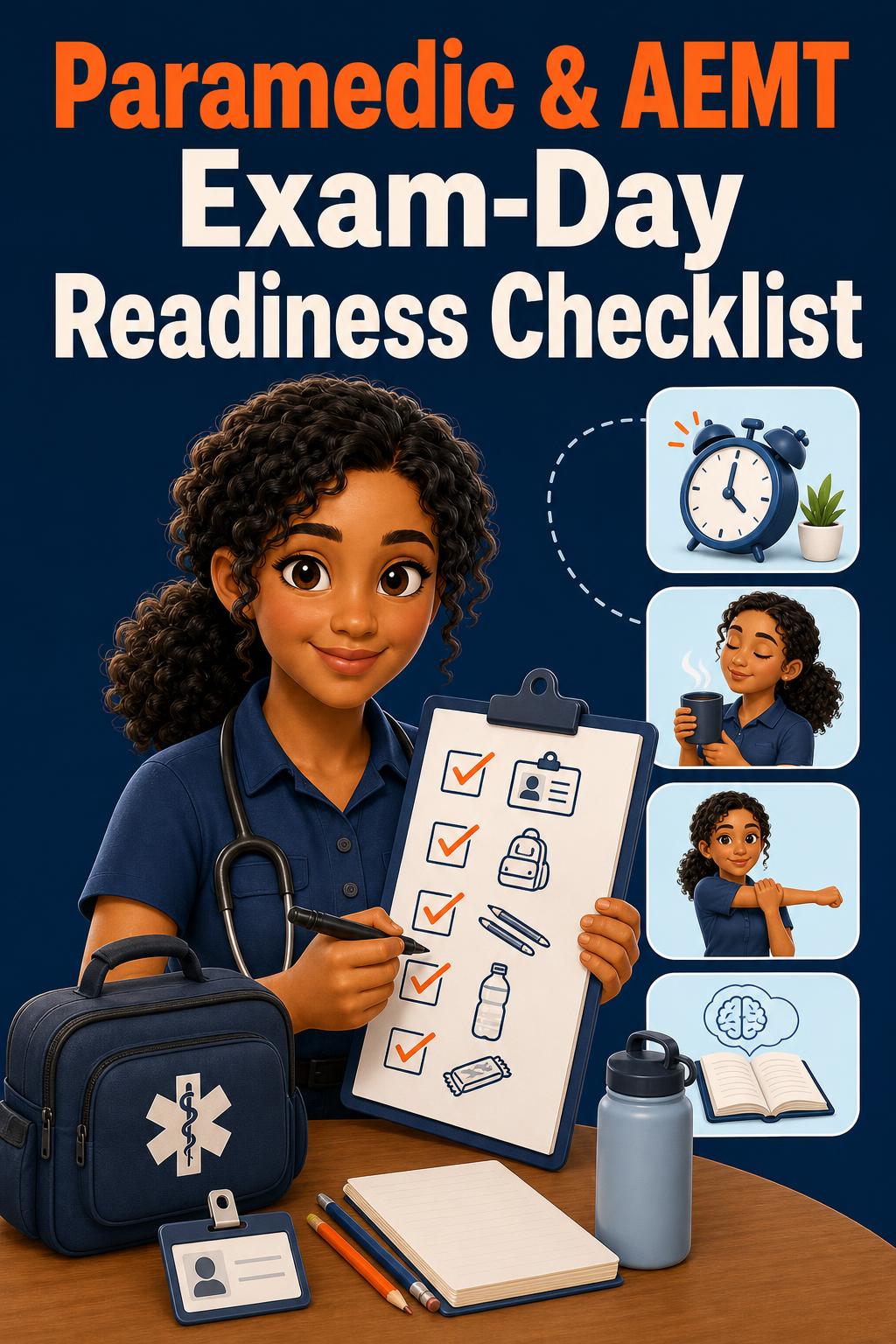
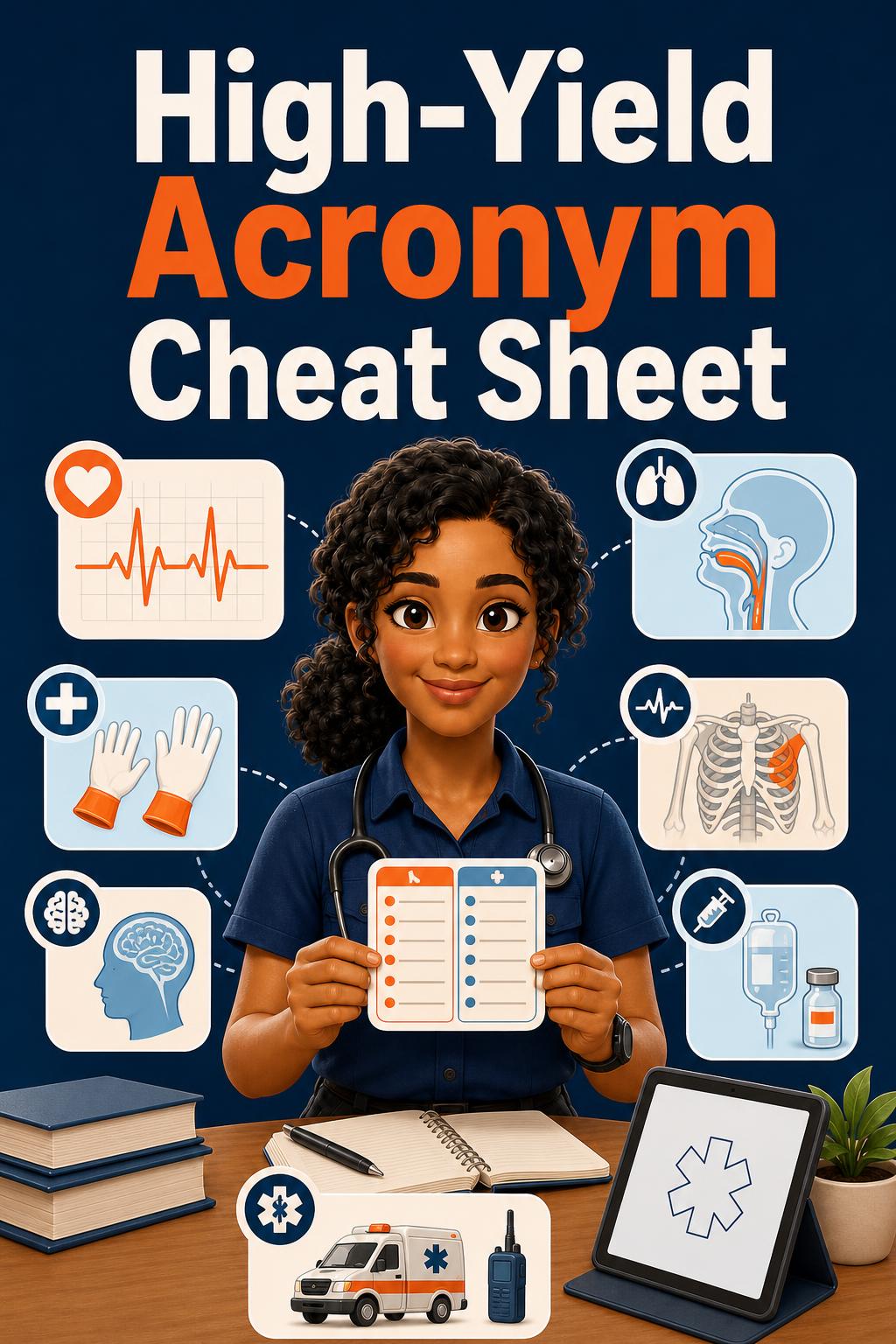
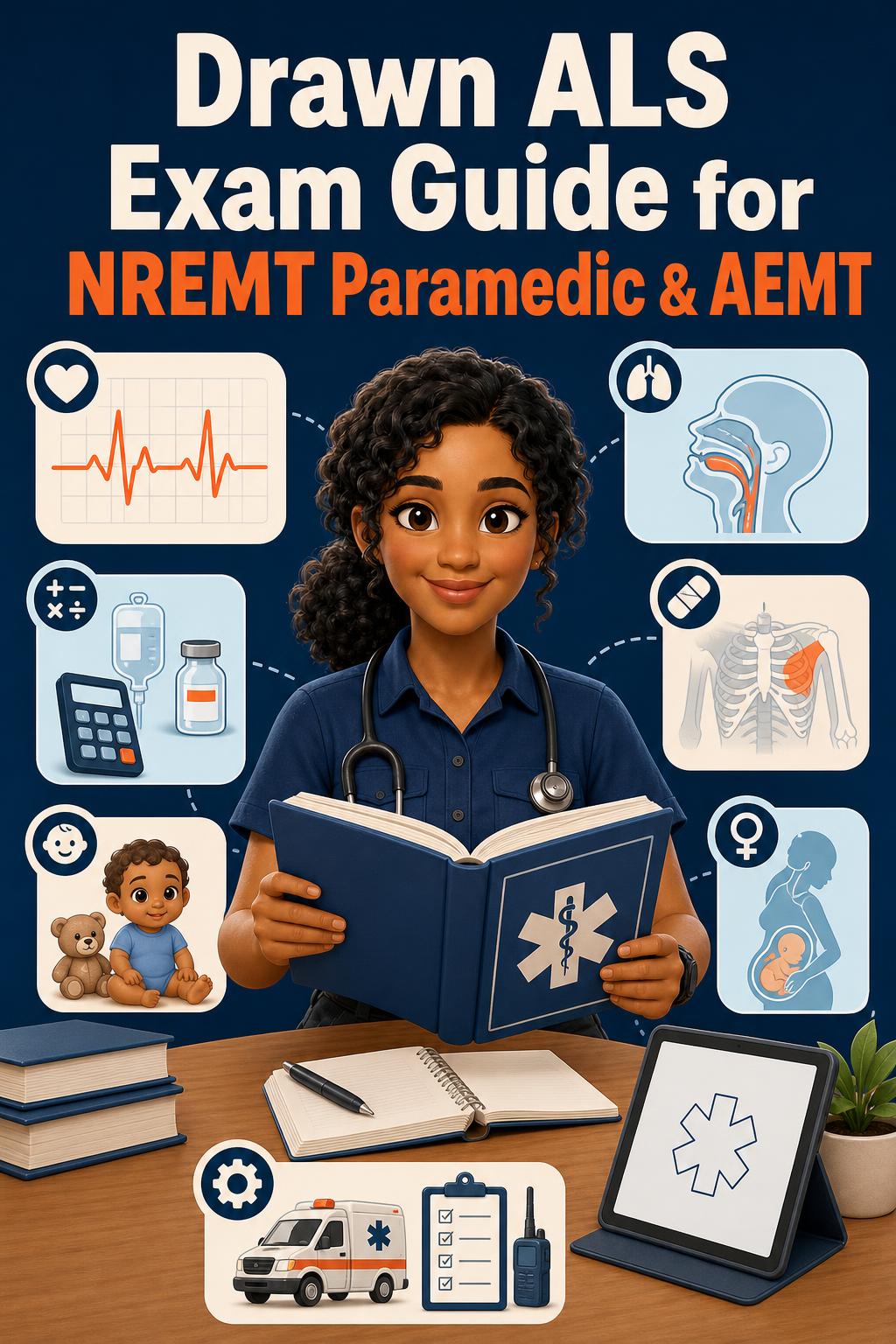


This illustrated PDF turns hard-to-review topics into clear visual pages: 12-lead ECG patterns, airway choices, medication math, trauma decision points, pediatric cautions, and operations. Each page focuses on one exam-relevant idea so you can review without digging through scattered notes.
Get the Illustrated GuideSecure checkout. PDF delivered by email within a few hours. 7-day refund guarantee.
The drawing shows the rule; the text backs it up.
7 parts, from 12-Lead ECG to Final Review Maps.
NREMT ALS content, EMS Education Standards, Scope of Practice Model.
Sample pages show the exact style used in the guide: lead placement, STEMI localization, pediatric weight checks, trauma triage, ventilation problems, and medication math steps.
The guide is a PDF study aid, not an official NREMT publication and not a substitute for your course, protocols, or medical direction.
You open your laptop after a long clinical day, planning to review 12-lead ECG before bed.
Within minutes, you have three tabs open, an old slide deck, a drug card, and a practice app asking questions faster than you can organize the concept.
You know you learned this in class. You can remember pieces: inferior leads, right-sided ECGs, ventilation rates, shockable rhythms, medication calculations. But when the question mixes two ideas, everything slows down.
So you reread another paragraph, highlight another sentence, and still wonder whether you are actually building recall or just staring at more text.
That is not because you are careless or behind. ALS content is dense, layered, and usually taught in formats that are hard to review quickly.
Axis determination in a 12-lead ECG requires assessment of the predominant QRS deflection in leads I and aVF, with consideration of lead II when the tracing appears borderline. A positive QRS in I and aVF suggests normal axis, while positive I and negative aVF may indicate left axis deviation. Clinical interpretation should be correlated with the patient presentation, rhythm, rate, and signs of ischemia or conduction abnormality.
The guide is organized like a review route: ECG first, then airway, medications, medical calls, trauma, special populations, and final decision maps. Each part contains focused pages you can revisit before class, after a shift, or during the final stretch before your exam.
You open the PDF and go straight to the 12-lead section instead of searching through mixed notes.
One page shows the lead groups, the vessel clue, and the next caution in a way your brain can scan quickly.
When you move to airway, you see the difference between oxygenation, ventilation, and airway protection laid out as a simple decision path.
Drug math is no longer a loose formula in a notebook. The page shows the setup, the units, and the check that helps you avoid a common mistake.
You are still doing the work, but the review feels organized, visual, and easier to repeat.
Get the Illustrated GuideThis part turns ECG review into visual patterns: lead groups, rhythm clues, STEMI localization, axis basics, and dangerous mimics. After it, you can review a tracing with a clearer order instead of jumping from one clue to another.
This part separates oxygenation, ventilation, airway positioning, adjuncts, and device choices. After it, you can connect the patient problem to the airway intervention being tested.
This part gives you a drawn method for unit conversions, weight-based dosing, concentrations, drip rates, and medication safety checks. After it, you can slow the problem down and set up the calculation in a repeatable way.
This part organizes high-frequency medical calls by presentation, assessment clue, and first priorities. After it, you can compare similar complaints without treating every scenario like the same algorithm.
This part makes trauma review practical by focusing on mechanism, primary survey, bleeding, shock, spinal considerations, and transport decisions. After it, you can follow the priority sequence without getting stuck on details too early.
This part highlights the special situations that can feel uncomfortable because the details change quickly by age, pregnancy, or baseline condition. After it, you can review the key cautions without mixing adult assumptions into every question.
This part ties together safety, communication, incident command, documentation, ethics, and final exam review maps. After it, you can finish with a structured pass through decisions that connect multiple topics.
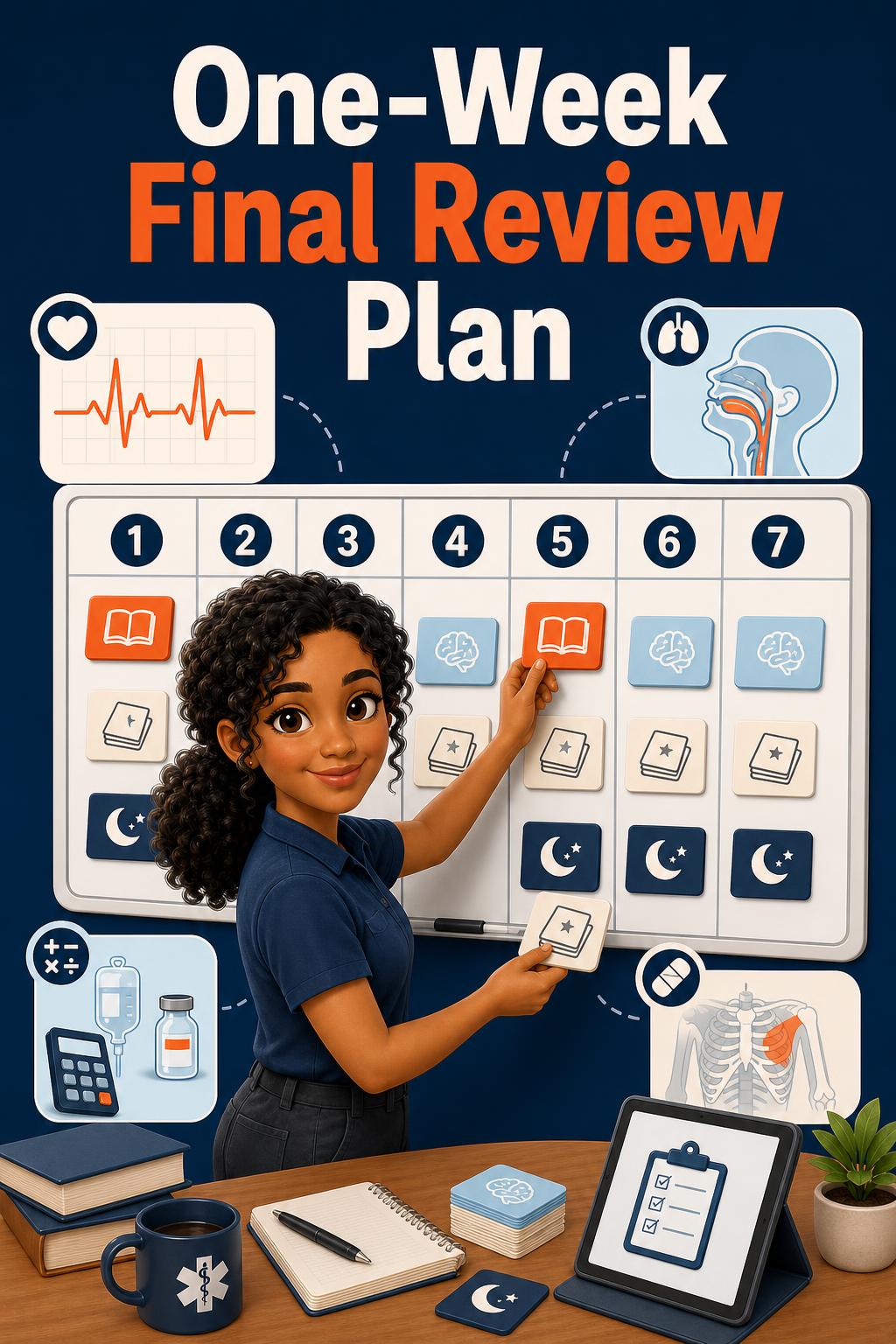
The guide ends with a final review plan that helps you revisit the highest-friction topics in a calm, repeatable order.


Total value: US$ 70.70
Complete illustrated PDF guide
You save US$ 33
✓ Less than one NREMT exam attempt (US$ 175)
Get the Illustrated Guide · US$ 37.70Your guide arrives by email within a few hours of the purchase, so you can save it, open it on your device, or print the pages you want to review.

You have learned the material, but your notes feel scattered. The guide gives you a visual path through the topics that are hardest to review quickly.

You need focused review without opening ten different resources. The one-page format helps you revisit ECG, airway, math, and trauma in short sessions.

You are balancing shifts, clinical time, and exam prep. The guide is built for repeatable review before or after a long day.
Not the right fit if you need An official NREMT product or a replacement for your course · A full paramedic textbook with every possible topic in depth · A guarantee that any study aid can make you pass an exam
You have 7 days to review the PDF. If it is not the study format you expected, contact us within 7 days and you will receive a full refund.
It is a PDF guide with illustrated pages. You can open it on a phone, tablet, laptop, or desktop.
The PDF is sent to your email within a few hours of the purchase. Please check your inbox and spam or promotions folder.
No. This is an independent study aid for NREMT-style ALS preparation and is not affiliated with, endorsed by, or published by the NREMT.
It is designed for paramedic and AEMT students who want visual review of ALS-heavy topics. Some pages are more advanced, especially ECG and medication sections.
No, but you should be taking or reviewing an EMS program. The guide explains topics visually, but it assumes you are familiar with basic EMS terms.
Yes. You can print the pages you want and mark them up for personal study.
No. Use it as a review aid alongside your course materials, current guidelines, local protocols, and medical direction.
You are covered by the 7-day refund guarantee. Contact us within 7 days and you will receive a full refund.
If dense notes and scattered apps are slowing you down, this illustrated guide gives you a calm, organized way to review the ALS topics you already need to know.
Get the Illustrated GuideSecure checkout. PDF delivered by email within a few hours. 7-day refund guarantee.